Difference Between Screen Printing and Pad Printing
Difference Between Screen Printing and Pad Printing
Screen printing and pad printing are two different printing technologies. They are used for different substrate materials, but both of them can print on plastic, ceramic, glass, mental, wood and so on. Now, let’s talk more about the difference of these two printing technologies to know which one is your best choice.
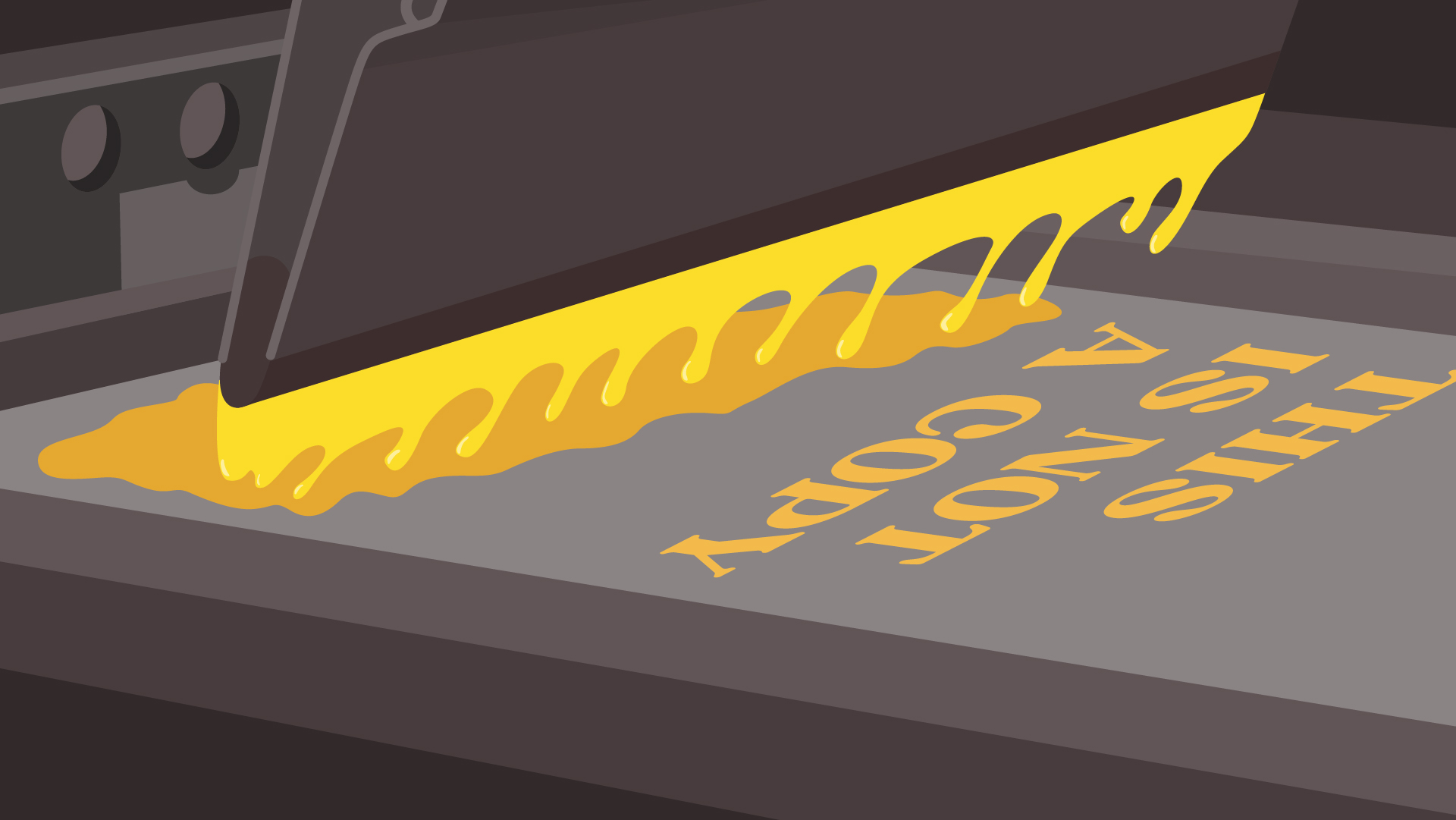
Silk Screen Printing is a method of transferring an image to a surface (usually fabric or paper) by pressing ink through a mesh screen. The screen is placed on the material, ink is applied to it, and then a screen printing squeegee is used to push the ink through the screen and onto the surface.
The advantage of screen printing is its flexibility with regard to substrates.It is ideal for high volume printing because the more products that need to be printed, the lower the cost per product. Despite the complexity of the setup process, screen printing usually requires only one setup. Another advantage is that screen printed designs are usually more durable than those created using heat press or digital methods.
The ink layer of screen printing is very thick, which is unmatched by other printing methods. When using white to cover the underlying color, with ordinary printing methods, it is necessary to print 3 to 4 times in the same area, while screen printing only needs to be done once to complete the process. The thickness of the screen printing ink layer is generally 20 microns, and for special thick film printing, it can reach 100 microns, and the thinnest can be as low as 6 microns. Therefore, the screen printing ink layer is thick and has a wide range of adjustability. Due to the thick ink layer, the reproduction of prints and the duplication of oil paintings have extremely realistic effects. However, in the printing of detailed patterns, the replication effect is somewhat limited.

The downside is that while screen printing is great for high-volume products, it is not as cost-effective for smaller batches.Additionally, screen printing is much more complicated to set up than digital printing or heat press printing.It also takes longer, so its turnaround time is usually slightly slower than other printing methods. Finally, it's also not suitable for designs with multiple colors or photography-based designs.
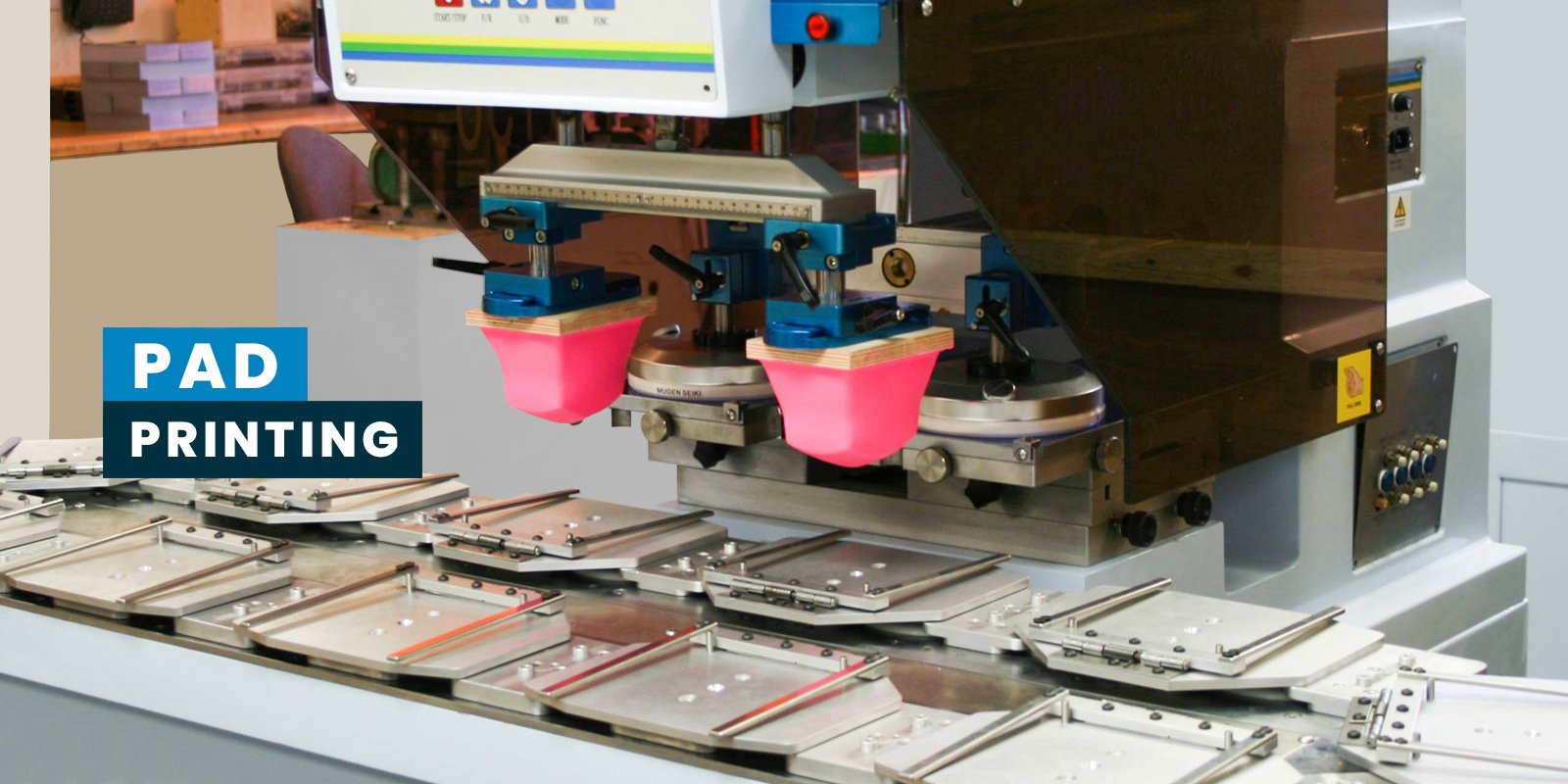
Pad printing uses a flexible silicone pad to transfer ink from an etched substrate to a product and is ideal for transferring 2D images to 3D objects. The basic principle of pad printing is as follows: On a pad printing machine, the ink is placed inside a steel plate engraved with text or patterns. Then, the text or patterns are copied onto rubber through the ink. Next, the rubber is used to transfer the text or patterns onto the surface of the product. It is best to solidify the ink through heat treatment or ultraviolet light irradiation methods.
Pad printing is particularly effective for printing small, irregular objects such as key rings and jewelry, which can be difficult with screen printing. However, setting up and executing a pad printing job is slower and more complicated than screen printing, and pad printing has a limited print area because it cannot be used to print large areas, which is where screen printing excels.
Screen printing is best suited for large images on flat surfaces, large double-sided images on cylindrical components, and opaque images on light, dark or transparent substrates. It is more cost-effective because screen printing can be completed in one pass, and each additional print increases the printing cost. It is also very suitable for images that only require a single color.
The pad printing process is most suitable for printing images on composite materials such as polypropylene, covering raised or depressed areas with images, covering any complex curves (such as depressions or protrusions), images close to vertical walls or obstacles, small image requirements, or for printing on smaller metal parts and multi color images.
There is no such thing as one process being better than another. Instead, each process is more suitable for specific applications. In short, screen printing can print large areas with flat surfaces on both flat and curved surfaces; pad printing can print small and multi-color printed products without any requirements for the shape of the product.
For more details about screen printing, please contact us at +86 15097355251
The Application of Nylon Mesh in Water Treatment
Multi-color printing methods in screen printing
Related Article